January 21, 2026
WhatisaCircuitBreakerandWhichOneIsSuitableforEachCircuit
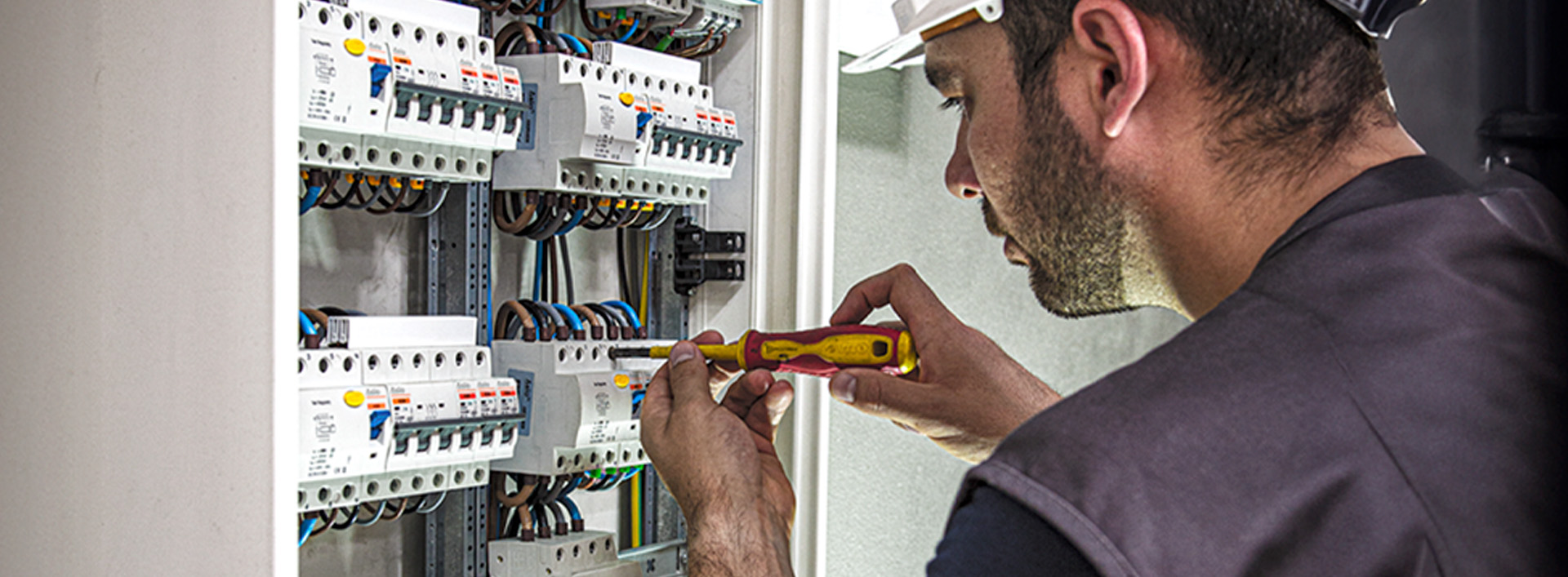
Among the essential components to ensure a safe electrical installation, circuit breakers occupy a prominent place.
These devices protect circuits and equipment from overloads and short circuits, preventing damage and serious risks.
In this article, ASLO explains everything you need to know to choose the right model and ensure maximum protection.
What is a Circuit Breaker?
A circuit breaker is an electrical protection device that automatically interrupts electrical current when it detects an anomaly, such as an overload or short circuit.
Without proper circuit breakers, cables can heat up, equipment can break down, and in the worst-case scenario, a fire can occur. Therefore, the main advantages of this equipment are:
- Safety: Prevents electrical accidents.
- Durability: Protects equipment and prolongs the service life of the installation.
- Efficiency: Reduces risks of unnecessary interruptions.
What is it for and how does it work?
The circuit breaker acts as a safety barrier. When the electric current exceeds the set limit, the internal mechanism trips and cuts off the power.
There are two main types of performance:
- Overcharge protection: When there is excessive consumption over an extended period.
- Short circuit protection: When a sudden failure occurs that causes a sudden increase in current.
Types of ASLO’s Circuit Breakers
At ASLO, you will find different solutions to meet the specific needs of each facility:
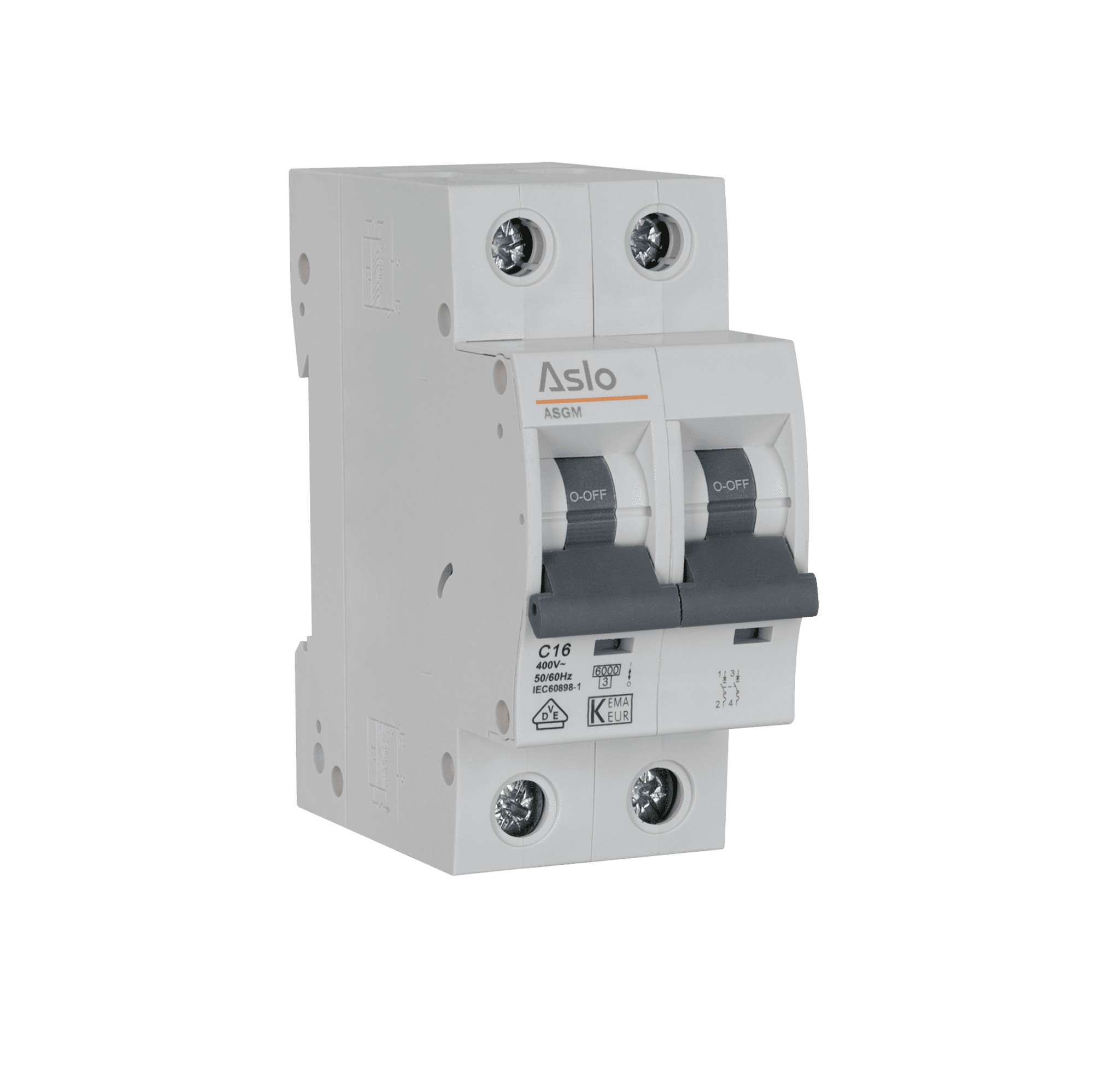
Ideal for installations in residential and commercial environments. Available in unipolar, bipolar, tripolar, tetrapolar, phase-cut, and neutral versions and different cutting powers, ensuring protection against overload and short circuit.
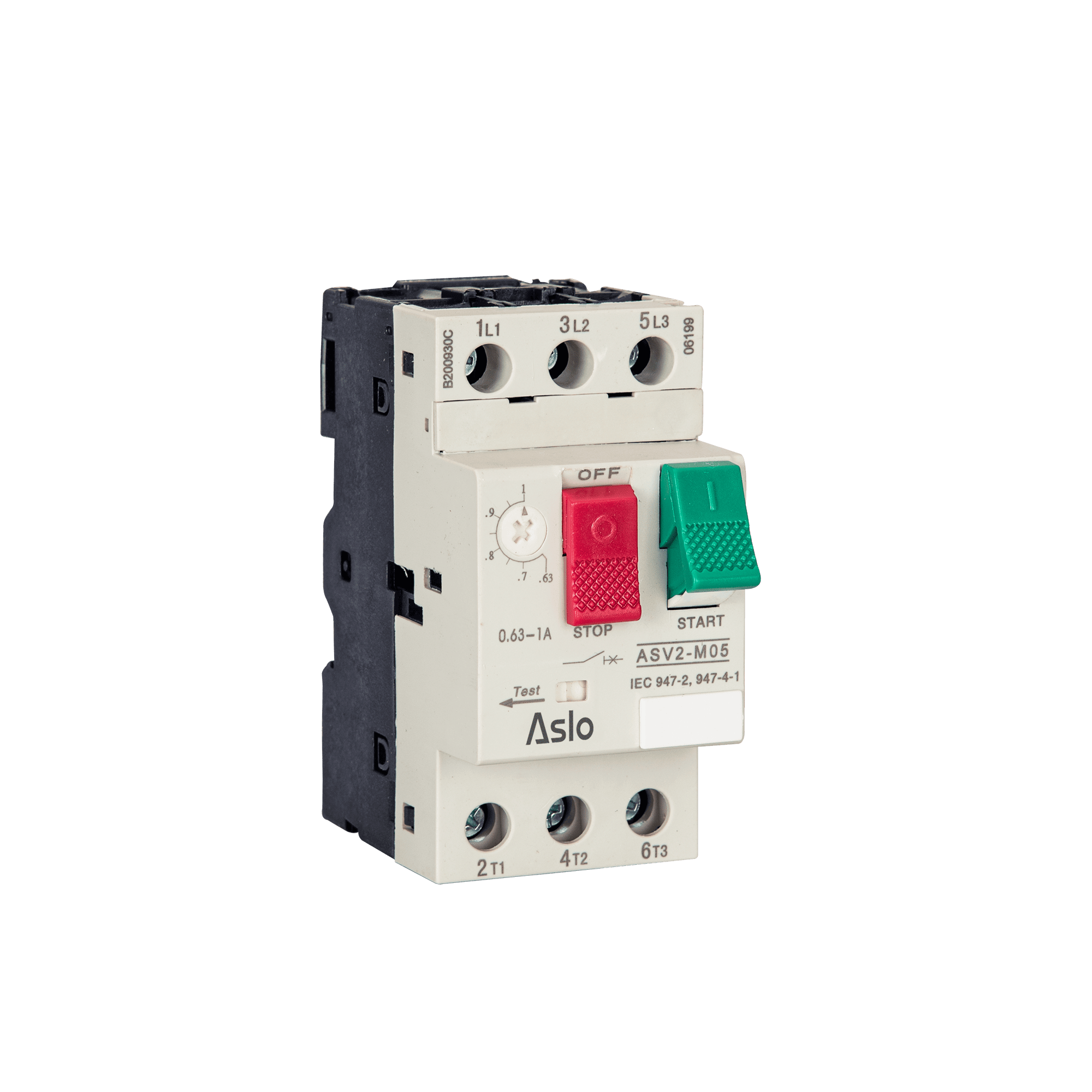
Developed to protect electric motors against overload and failures, ensuring safe operation and extending the service life of equipment.
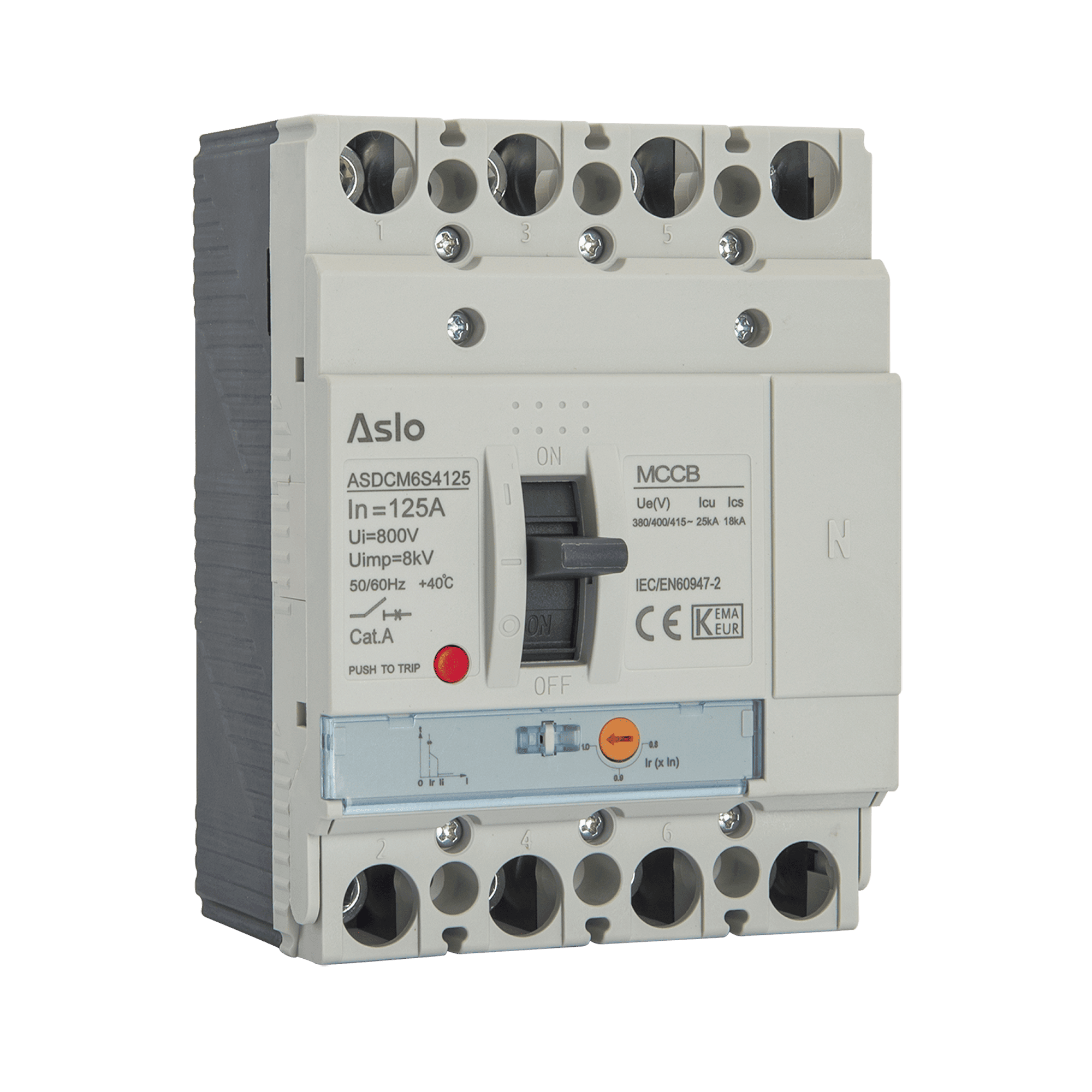
Suitable for industrial installations or circuits of higher power. With adjustable thermal protection, they offer flexibility and safety in demanding environments.
How to Choose the Right Circuit Breaker for Each Circuit?
The choice depends on the following main factors:
- Rated Current (A): Must match the load of the circuit.
- Illumination: normally 10A.
- Sockets: usually 16A or 20A.
- Higher power equipment (stove, air conditioning): 32A or more.
- Number of poles:
- Unipolar: for single circuits.
- Bipolar, three-pole or four-pole: for three-phase circuits or specific equipment.
The circuit breaker is an essential element for any electrical installation. Choosing the right model for each circuit ensures safety, efficiency, and peace of mind.
At ASLO, you will find a complete range of circuit breakers with certified quality and solutions adapted to your needs. Because when it comes to electrical protection, the right choice makes all the difference!